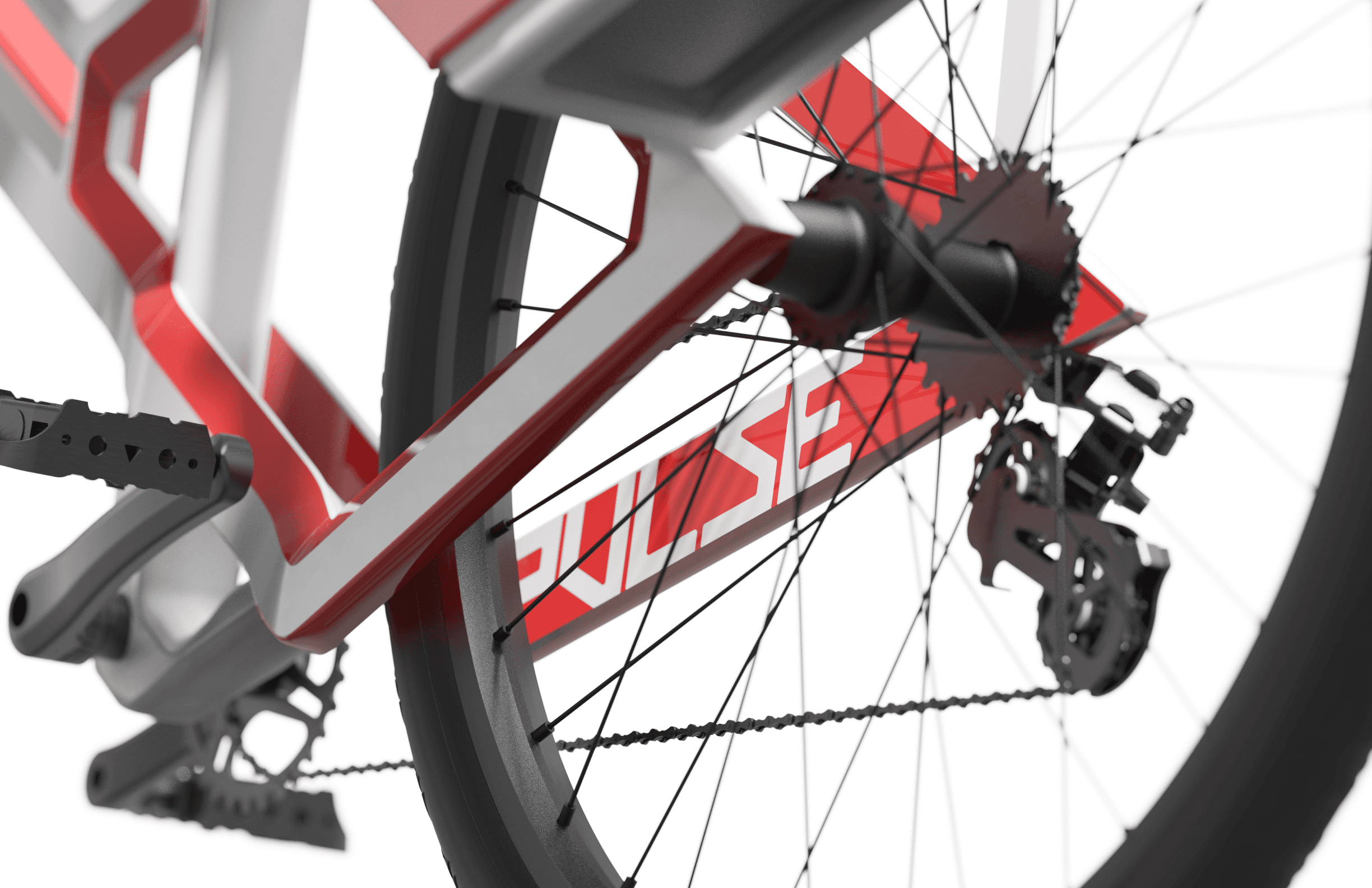
pulse
Most EMS bikes are built to move equipment. Pulse is designed to support the person using it—reducing physical strain, simplifying cognitive load, and creating a recognizable safety presence in crowded environments.


Why Bikes?
ACCESS comes first… REaching where ambulances CAN'T.
Large crowd events limit the accessibility and maneuverability of traditional emergency vehicles. EMS bike units extend responders’ reach, giving them faster access, greater situational awareness, and a more approachable presence within crowded environments.

Understanding EMS Response
WHAT DOES response MEAN FOR EMS?
We spoke with five EMS professionals across administrative and field roles, using interviews, observational research, precedent studies, and whiteboarding to map the complete response workflow. Across different scenarios, one priority consistently emerged: access—to the scene, to equipment, but ultimately to the patient.
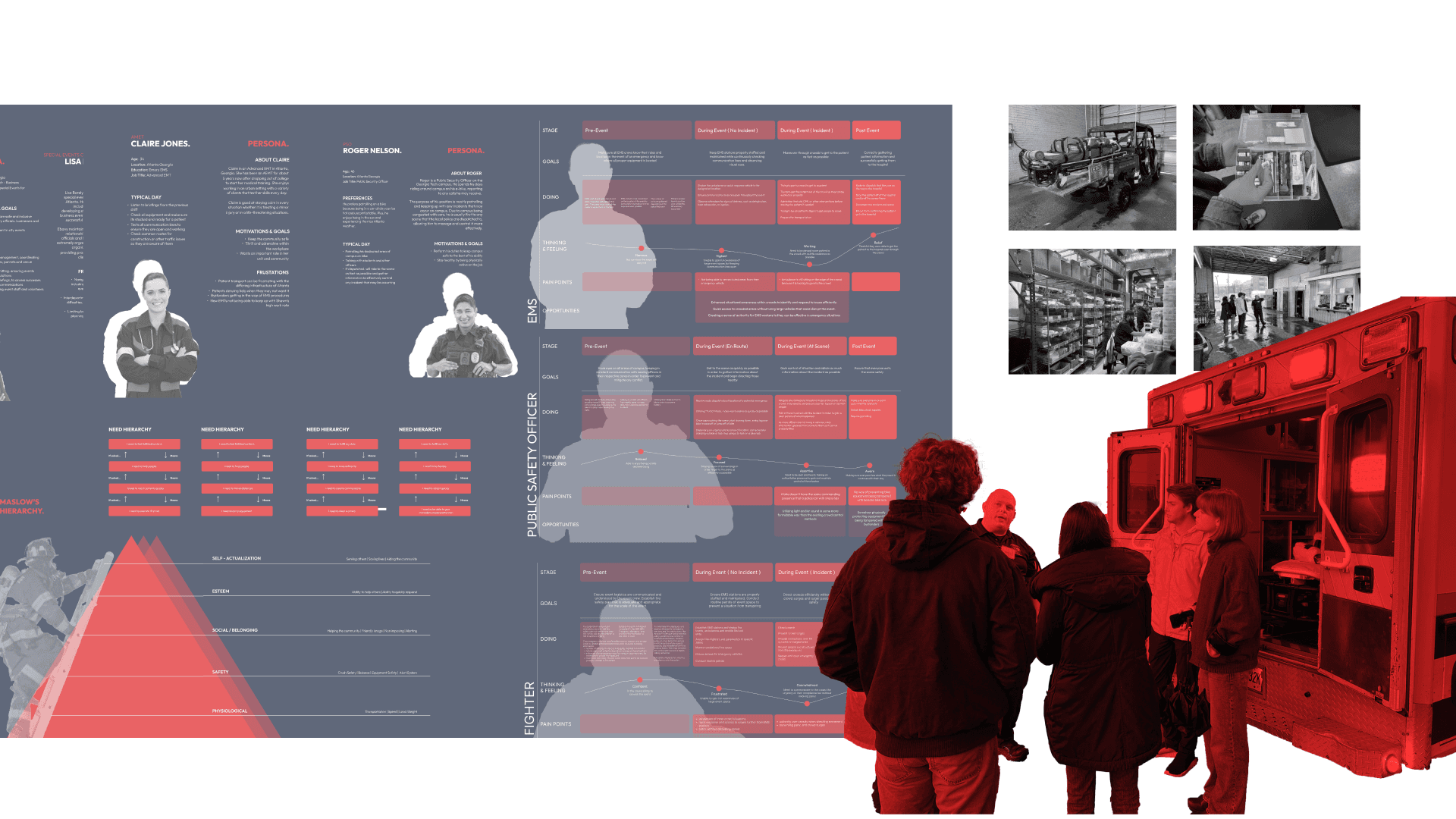
Access Is More Than Mobility.
Bikes provide the speed and physical access EMS teams need, but existing systems are largely built to transport equipment rather than support responders using it. Riders are left managing the physical burden of their gear, the cognitive load of navigation, and inconsistent workflows once they arrive.
Designing the System
We explored concepts across equipment, visibility, communication, ergonomics, and workflow—then brought them together into one integrated EMS response system. Pulse was designed around adaptability: supporting different responders, environments, and treatment scenarios without compromising the narrow footprint that makes the bike valuable.

Creating an Authoritative Presence
EMS responders need to assert urgency and direction without creating unnecessary distress in the surrounding crowd. I developed Pulse’s iconic narrow silhouette, parallel frame geometry, high-visibility graphics, and EMS labeling to make the bike immediately recognizable as a safety resource.
Physical cardboard profiles allowed us to evaluate the silhouette at full scale, refine proportions, and ensure the bike stayed within the rider’s body width for movement through tight crowds.

Communicating Through the Crowd.
Existing EMS bikes are often visually indistinguishable from standard bicycles, making it difficult for responders to signal urgency or establish presence. I integrated ambient and directional lighting into the frame, allowing Pulse to communicate movement, identity, and authority before the responder reaches the patient.
The frame combines hollow aluminum extrusions and cast components, creating protected internal pathways for electronics while retaining the reliability of a non-electric drivetrain.

Making Equipment Part of the Workflow.
Instead of placing the burden of equipment on the rider, Pulse integrates medical cargo directly into the bike while balancing weight, accessibility, and maneuverability. We prototyped removable modules, magnetic flaps, quick releases, and drop-down storage to support treatment both at the bike and away from it.

The final

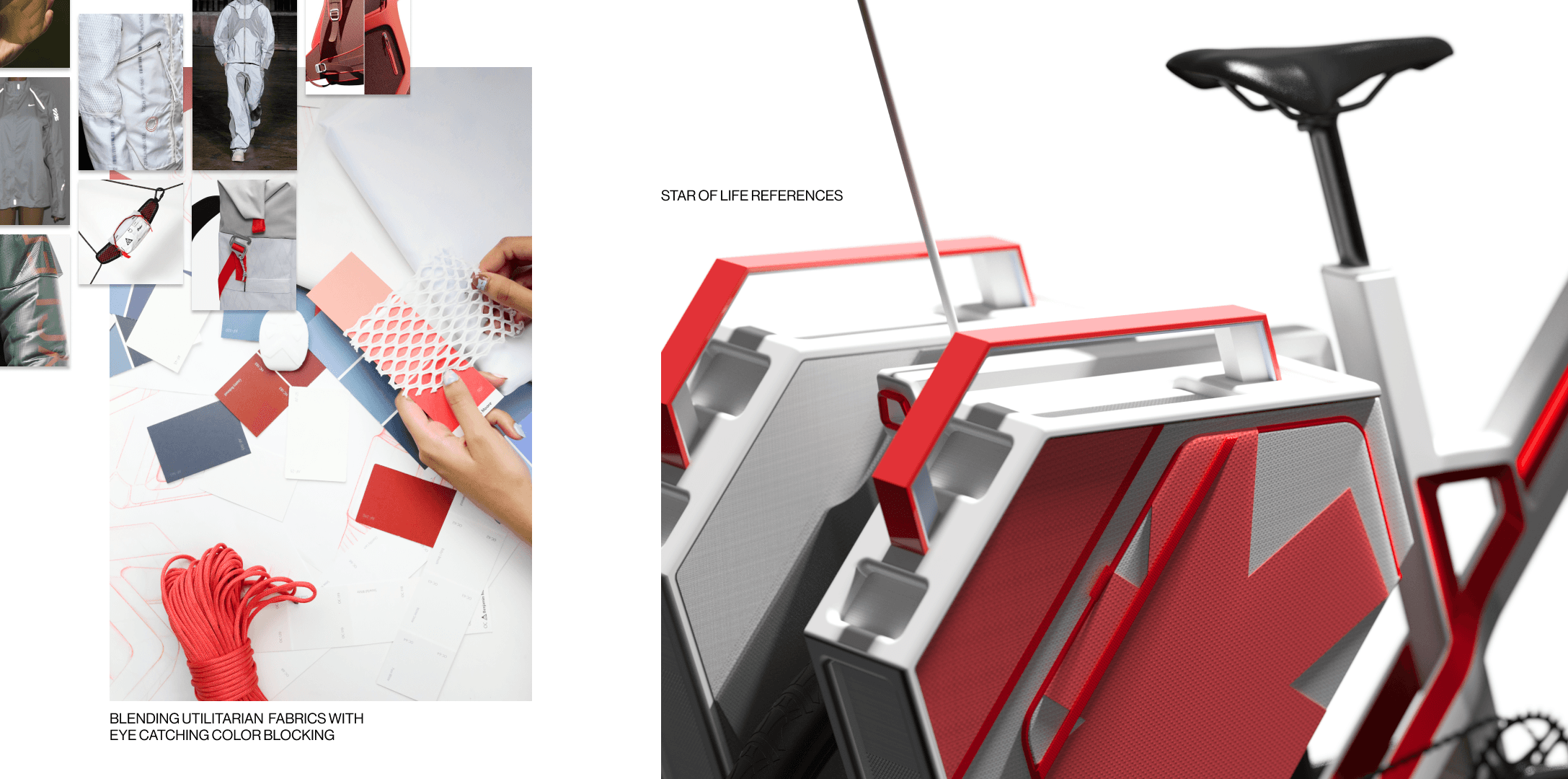
Reducing Cognitive Load.
Communication and navigation compete for attention during already high-stress response scenarios. I integrated tracking, lighting, and communication controls directly into the handlebars, keeping essential interactions within reach while allowing the responder to maintain awareness and control.
We iterated handlebar geometry, button placement, and one-handed interactions to simplify the interface around the actions EMS riders perform most frequently.
Pulse — Built Around the Responder.
Most EMS bikes are built to move equipment. Pulse is designed to support the person using it—reducing physical strain, simplifying cognitive load, and creating a recognizable safety presence in crowded environments.
I CAD-modeled and surfaced the complete bike in SolidWorks, rapidly resolving evolving form, engineering, cargo, and electronic requirements on an accelerated timeline before preparing the design for 3D printing and the final appearance prototype.
Let Pulse absorb the strain, so EMS workers can address the pain.

More works